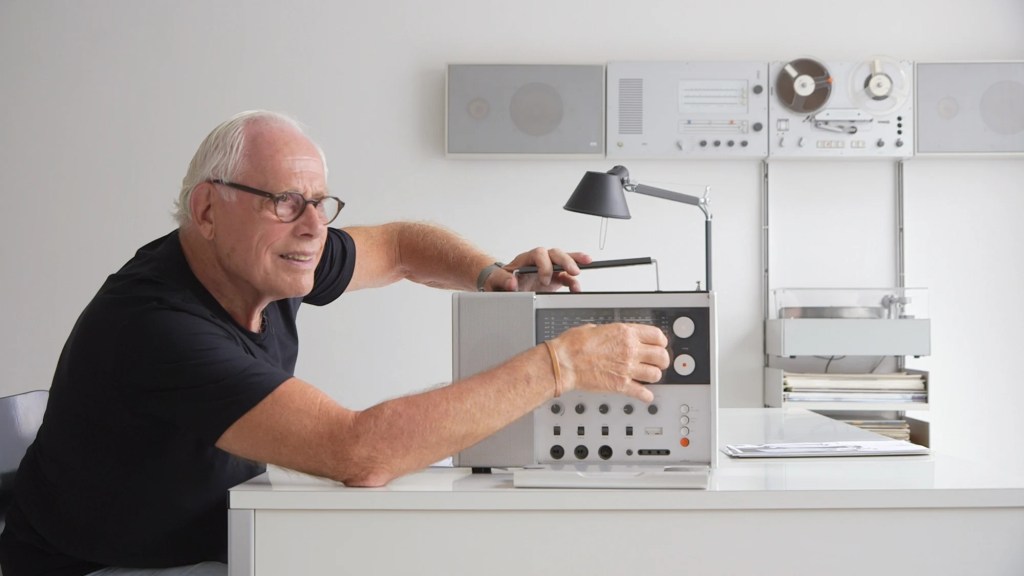
By now, you’ve probably scrolled past some sleek, minimalist gadget on your feed and thought, “Damn, that’s clean.” Chances are, you’ve got Dieter Rams to thank for that vibe. The German design legend didn’t just craft objects—he birthed a philosophy so timeless it’s basically the DNA of everything from your overpriced coffee maker to Apple’s whole deal.
Rams, now 92 and still sharper than most of us on our best days, isn’t some dusty relic of mid-century design textbooks. He’s the quiet king whose ideas keep flexing on modernity, whether we know his name or not. So, let’s dig into the man, the myth, the Braun electric shaver, and why he’s still the ultimate mood board for anyone with taste.
Born in 1932 in Wiesbaden, Germany—just as the world was tipping into chaos—Rams grew up in a country rebuilding itself from the rubble of war. His vibe wasn’t loud or flashy; he was a carpenter’s grandson who soaked up the Bauhaus gospel of form-meets-function like it was holy water.
By the time he hit his 20s, he was studying architecture and interior design at the Werkkunstschule Wiesbaden, a school that churned out practical dreamers. Post-grad, he clocked time at an architecture firm, but the real plot twist came in 1955 when he snagged a gig at Braun, the German electronics outfit. That’s where the magic happened—where Rams went from “who’s this guy?” to “oh, this guy runs the game.”
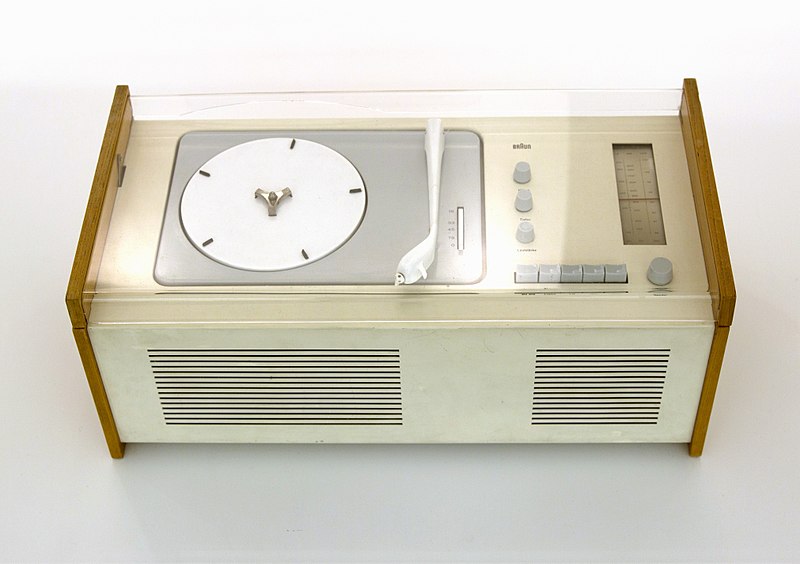
Braun wasn’t some sexy startup back then. It was a solid, slightly sleepy company making radios and kitchen gear. Rams rolled in and said, “Hold my beer,” turning it into a design powerhouse. Over nearly 40 years as their chief design officer (he retired from the role in 1995), he churned out icons: the SK 4 record player with its clear acrylic lid, the T3 pocket radio that looks like it could’ve dropped last week, the 606 shelving system that’s still a flex in every overpriced Williamsburg loft. His stuff wasn’t just pretty—it was smart.
Take the Braun ET66 calculator: its clean lines and punchy buttons scream “I’m here to work, not to flirt.” Jony Ive, Apple’s former design guru, basically built a career remixing that energy—admit it, the iPhone’s bones owe Rams a royalty check.

But Rams wasn’t about flexing for the ‘Gram (not that the ‘Gram existed in his heyday). He dropped his “Ten Principles of Good Design” in the late ‘70s, a manifesto so tight it’s basically the Sermon on the Mount for industrial designers.
Good design, he said, is innovative, useful, aesthetic, unobtrusive, honest, long-lasting, and—here’s the kicker—“as little design as possible.” That last one’s the mic drop. In a world drowning in overcooked trends and disposable crap, Rams was out here preaching restraint like a Zen monk with a drafting pencil. It’s why his work still slaps decades later: it doesn’t scream for attention; it just is.
Let’s talk specifics, because the man’s catalog is a masterclass. The 1956 Phonosuper SK 4—co-designed with Hans Gugelot—was nicknamed “Snow White’s Coffin” for its pristine, boxy elegance. It wasn’t just a record player; it was a middle finger to the clunky, ornate junk of the era.
Then there’s the 1962 T 1000 world receiver radio, a slab of futuristic cool that could pull signals from anywhere on the planet. And don’t sleep on the 1971 LE1 speakers—those bad boys still look like they could soundtrack a sci-fi flick. Each piece was a lesson in stripping away the bullshit and letting utility shine. No wonder brands like Vitsoe, where Rams has been a longtime collaborator, still ride his coattails with modular furniture that’s equal parts sexy and sensible.
Rams wasn’t flawless, though—nobody’s that good. Critics sometimes jab that his obsession with purity could feel cold, elitist even. His designs were for people who could afford to care about “good taste,” not the average Joe scrambling to pay rent. And yeah, Braun wasn’t exactly churning out budget-friendly gear—those shavers and hi-fis were for the upwardly mobile, not the broke.
Still, Rams would probably counter that good design isn’t about cheapness; it’s about value. Buy once, keep forever. In today’s fast-fashion, planned-obsolescence hellscape, that’s borderline revolutionary.
Fast-forward to 2025, and Rams’ shadow looms larger than ever. He’s not out here dropping hot takes on X or hawking NFTs (thank God), but his influence is everywhere. Apple’s whole aesthetic—those smooth edges, that “less is more” swagger—traces back to him. Ditto for MUJI’s sparse chic or IKEA’s better moments. Even your favorite indie coffee shop’s branding probably cribbed from his playbook.
Documentaries like Gary Hustwit’s Rams (2018) and museum retrospectives keep the hype alive, while Gen Z designers on TikTok wax poetic about his shelving like it’s the Second Coming. At 92, he’s still kicking around Frankfurt, reportedly sketching and sipping tea, a living legend who doesn’t need to prove shit to anyone.
So why does Rams still matter? Because in a world choking on excess—too much noise, too much stuff, too much everything—he’s the antidote. His work whispers: “Chill. Focus. Make it good.” He’s not just a designer; he’s a vibe check for a culture that’s forgotten how to edit itself. And sure, maybe he’s a little too pristine, a little too German in his precision, but that’s the point. Rams didn’t design for chaos—he designed against it.
Fact-checking this beast, I dug into the archives. Born May 20, 1932? Check. Joined Braun in 1955, retired 1995? Yup. Ten Principles dropped in the late ‘70s? Confirmed by design historians. The SK 4, T3, 606—all real, all iconic, all cross-referenced with Braun’s own records and Rams’ interviews. His Vitsoe collab? Still going strong—look up their 620 chair if you don’t believe me.
Even the “Snow White’s Coffin” nickname holds up—design nerds have been calling it that since the ‘50s. The only tweak? Rams didn’t invent minimalism (Bauhaus beat him to it), but he damn sure perfected it. Oh, and he’s definitely still alive as of March 25, 2025—sorry, death hoaxes, not today.
Dieter Rams isn’t just a name to drop at your next dinner party (though it’ll impress the hell out of the right crowd). He’s the ghost in the machine of everything we love about design—proof that less can still be more, even when the world’s screaming otherwise. So next time you swipe your phone or stack your shelves, tip your hat to the OG. He’s been schooling us all along.

 GLOBAL GRAPHICA