
Ed Ruscha’s “Now Then” retrospective, now lighting up the Los Angeles County Museum of Art (LACMA), is nothing short of a celebration of the pop and conceptual art heavyweight whose career has spanned six transformative decades. Having made its debut last fall at MoMA in New York, this show has now landed on the West Coast, where Ruscha has been a fixture since the 1950s. This isn’t just an exhibition; it’s a sprawling, no-holds-barred dive into Ruscha’s artistic evolution, packed with over 250 works that showcase his unorthodox genius.
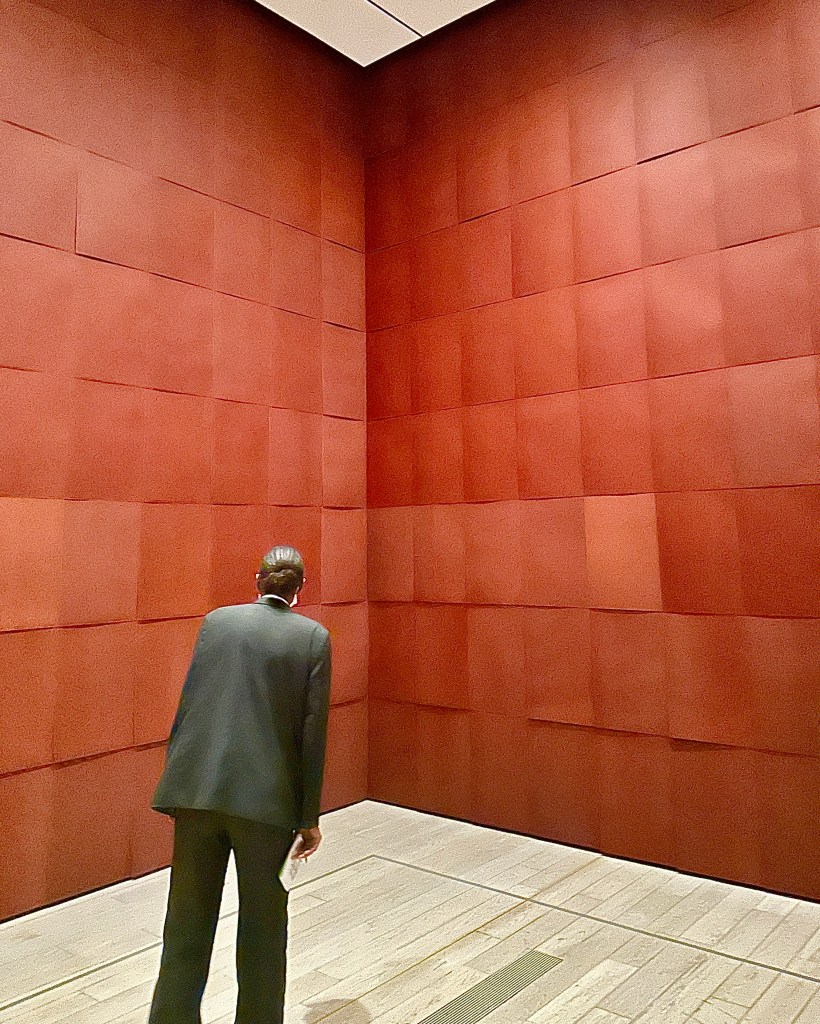
The crown jewel of “Now Then” is the notorious “Chocolate Room” from 1970—a piece that originally premiered at the Venice Biennale. It’s a room entirely lined with chocolate-paste printed paper, meant to assault the senses with an overpowering sweetness. At MoMA, the installation was a bust due to poor placement, but at LACMA, the room is finally in a dedicated space where the olfactory onslaught is delivered just as Ruscha intended. Step in, and you’re met with an initial sweet allure that quickly turns nauseating—a perfect, immersive sensory experience.
From there, the show kicks off a deep dive into Ruscha’s career. Spread across the second floor of LACMA’s BCAM building, the exhibition offers a smorgasbord of his work—from his early drawings and paintings to his latest experiments. It all begins with his iconic 1960s “single-word” paintings like “Oof” and “Honk”—works that transform banal language into something profoundly enigmatic.
Ruscha’s take on Los Angeles’ urban sprawl is another highlight. His iconic Hollywood sign paintings are more than just depictions; they’re elaborate mind-benders. Take a 1968 print where the sign floats against a surreal sky, distorting reality and pushing viewers to question their perceptions of the cityscape.
And then there’s “Actual Size” (1962)—a piece where a can of Spam rockets across the canvas in a high-octane commentary on art versus commercialism. This isn’t Abstract Expressionism’s pomp and circumstance but a cheeky jab at the very stuff of everyday life.
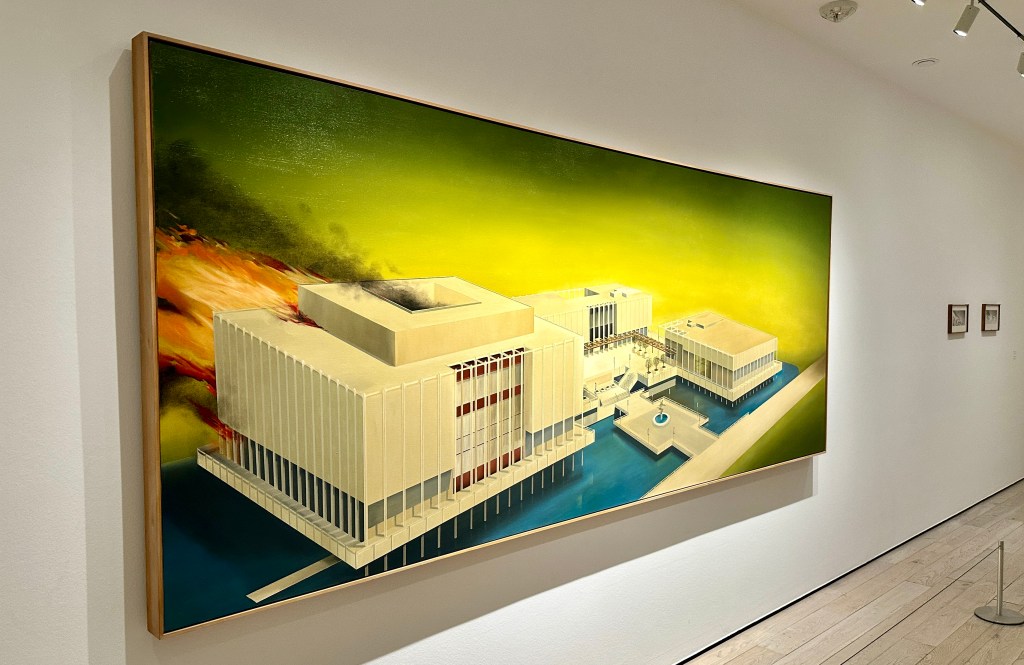
Ruscha’s obsession with the mundane extends into his legendary photo-books. “Thirtyfour Parking Lots in Los Angeles” (1967) and “Every Building on the Sunset Strip” (1966) were once seen as dry documentation, but they’re re-framed here as razor-sharp critiques of urban spaces. The parking lot series, with its meticulous but stained compositions, takes a sledgehammer to the idea of aesthetic progress, proving that innovation often emerges from the most prosaic corners.
The retrospective doesn’t shy away from Ruscha’s later work, including the 2007 diptych “Azteca / Azteca in Decline.” Inspired by a mural in Mexico City, these paintings capture the decay of both physical and metaphorical structures, serving up a poignant meditation on the fleeting nature of progress.
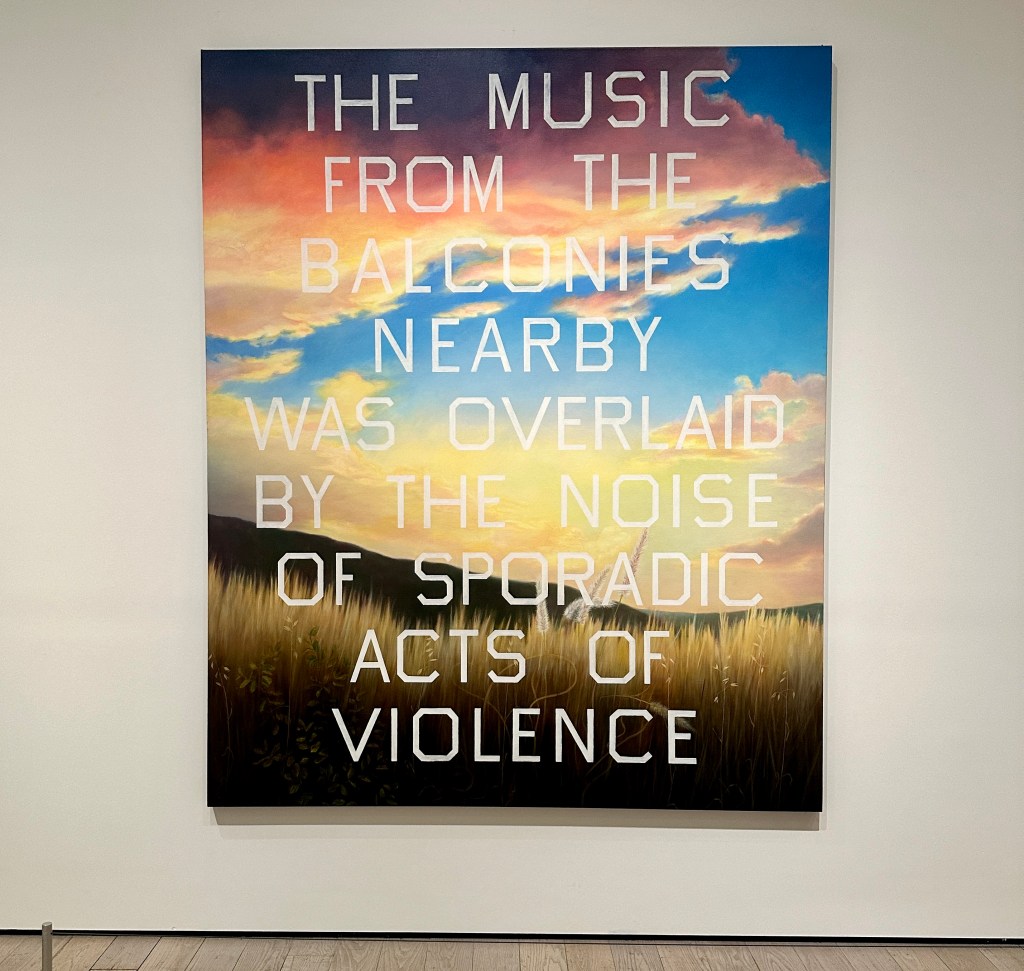
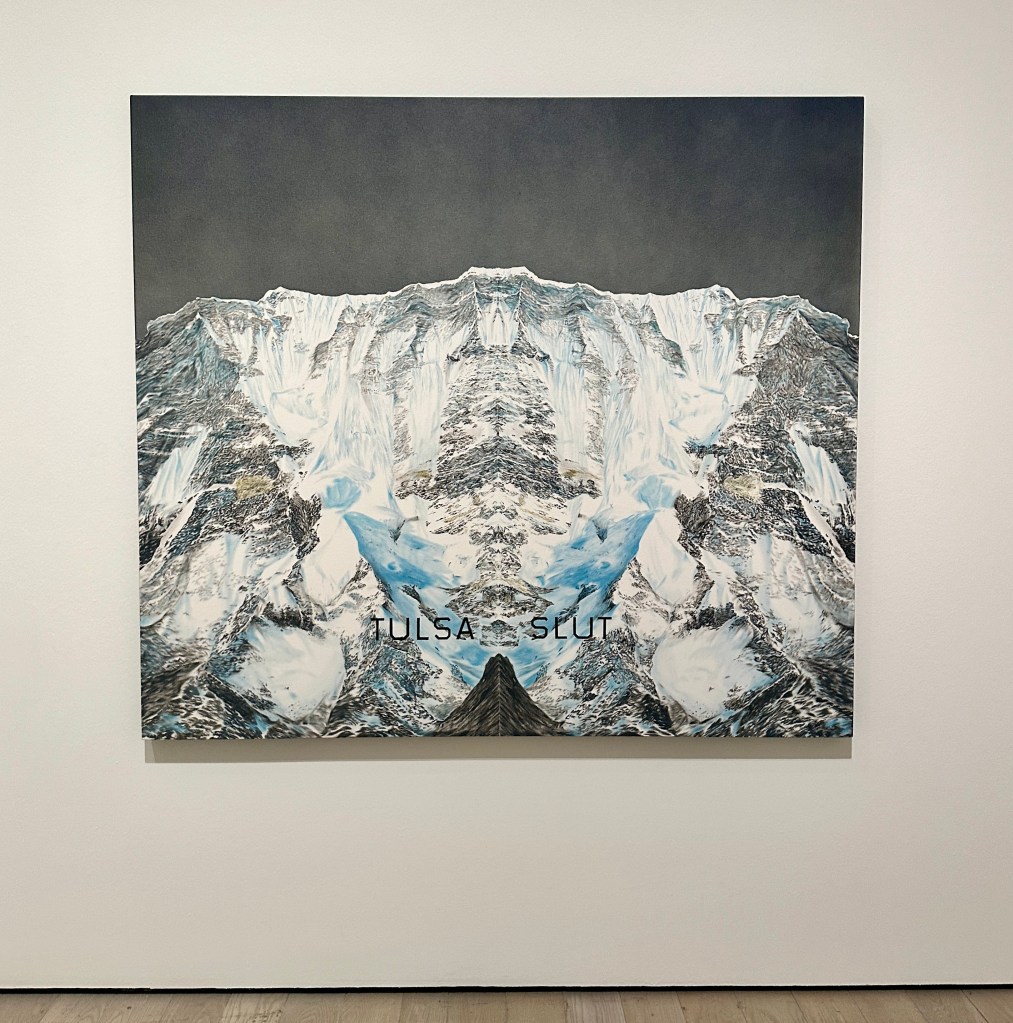
Finally, “Now Then” dives into Ruscha’s fascination with language and typography. His word-paintings on moiré fabric, like “People getting ready to do things,” use egg yolk and translucent shellac to create a dialogue between materiality and text. It’s Ruscha’s masterful fusion of visual and verbal that makes these works stand out.
In essence, “Now Then” is not just a look back; it’s a vibrant dialogue across time. It juxtaposes Ruscha’s formative pieces with his latest experiments, offering a panoramic view of his career while engaging deeply with the cultural fabric of Los Angeles. If you’re in L.A., this show is a must-see—a provocative, thought-provoking dive into the mind of one of America’s most inventive artists.





 GLOBAL GRAPHICA