
In the world of royals, even a seemingly mundane family photo can ignite a firestorm of controversy and conspiracy. Case in point: the recent debacle surrounding a portrait of Kate Middleton, the Duchess of Cambridge, and her children, which has become the center of a digital editing scandal that has left tongues wagging and conspiracy theories swirling.
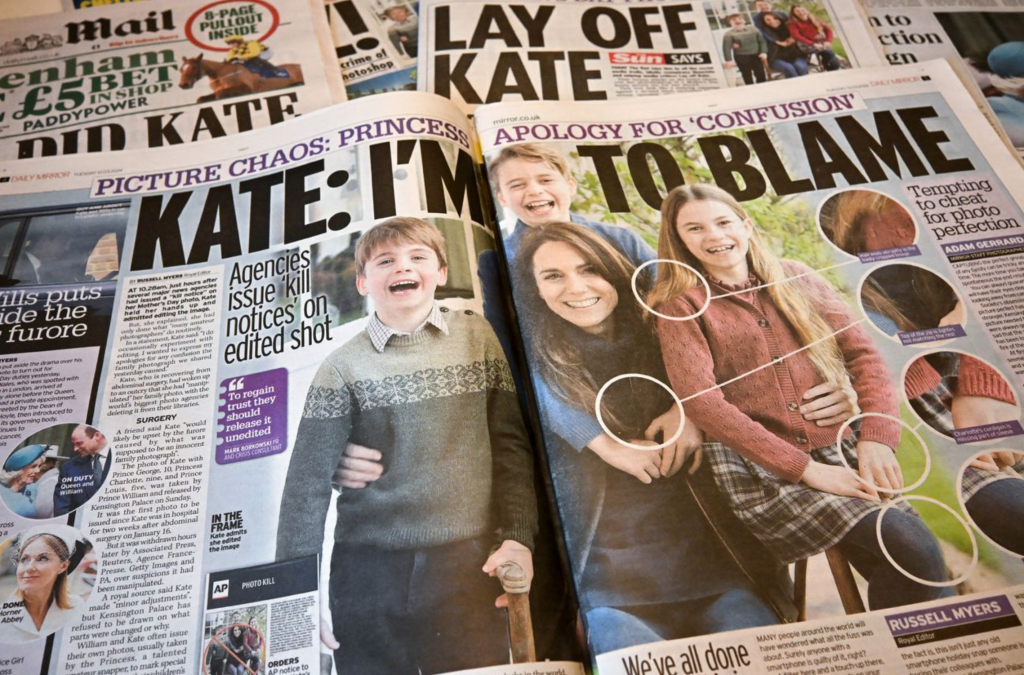
The image in question is a picturesque family-style portrait, set against the backdrop of a lush garden. Kate, radiant as ever, stands poised with her three children – Prince George, Princess Charlotte, and Prince Louis – frolicking around her. On the surface, it’s a charming snapshot of domestic bliss. But upon closer inspection, the cracks begin to show.
Sharp-eyed observers quickly noticed anomalies in the photo – strange shadows, wonky proportions, and a general air of artificiality that hinted at digital manipulation. Prince Louis’s elongated arm stretched towards his mother like a surreal appendage, while Kate’s features seemed suspiciously airbrushed, with smoothed skin and enhanced contours.
Enter the palace’s official response, which can only be described as a masterclass in mishandling a PR crisis. Rather than addressing the concerns head-on, Buckingham Palace opted for a strategy of silence and obfuscation, refusing to acknowledge the allegations of photo manipulation and dismissing them as baseless rumors. This lack of transparency only served to fuel the flames of speculation, leading many to question what the palace was trying to hide.
In a feeble attempt to quell the growing uproar, Kate Middleton herself stepped into the fray, issuing a statement claiming responsibility for the edits and insisting that she had merely tinkered with the photo as an amateur photographer experimenting with new techniques. While her explanation may have been intended to put the controversy to rest, it only served to raise further questions about the palace’s handling of the situation.
The implications of this debacle extend far beyond the realm of tabloid gossip. At its core, this controversy speaks to larger issues of authenticity, transparency, and media manipulation in the digital age. In an era where images can be easily doctored and reality is increasingly subjective, how can we trust what we see? And what does it say about our society when even the royal family – long held up as paragons of tradition and decorum – succumbs to the allure of digital enhancement?
From a political standpoint, the fallout from this scandal could have far-reaching consequences for the monarchy’s public image and credibility. At a time when trust in institutions is at an all-time low, the palace’s mishandling of the situation only serves to further erode confidence in the monarchy and fuel anti-establishment sentiment.
Journalistically, this incident raises important questions about the role of the media in holding powerful institutions to account. In an age of clickbait headlines and sensationalist reporting, it’s all too easy for the truth to get lost in the shuffle. As journalists, it’s our responsibility to cut through the noise and shine a light on the facts, no matter how inconvenient they may be.
Culturally, the Kate Middleton Photoshop scandal serves as a stark reminder of the pressures faced by women – even those as seemingly untouchable as royalty – to conform to impossible standards of beauty and perfection. In a society obsessed with image and appearance, the line between reality and fantasy has never been blurrier.
In the end, the true impact of this controversy remains to be seen. But one thing is certain: the royal Photoshop fiasco has exposed cracks in the facade of the monarchy, revealing a world of smoke and mirrors where even the most iconic images can’t be taken at face value.
For good analyses of the image, check the New York Times story where the photo edits are explained in details and U.K. press coverage via the Independant. See below.


 GLOBAL GRAPHICA