We like wine. We like drinking it, whether imbibing a basic table wine from the local Trader Joe’s supermarket with an evening meal or a high-quality vintage wine from Burgundy or Napa. (We tend to drink way more of the former than the latter, by the way).
We like learning about the wines, too. It’s interesting to know all about the various regions where the wines are made, the incredible variety of types and tastes.
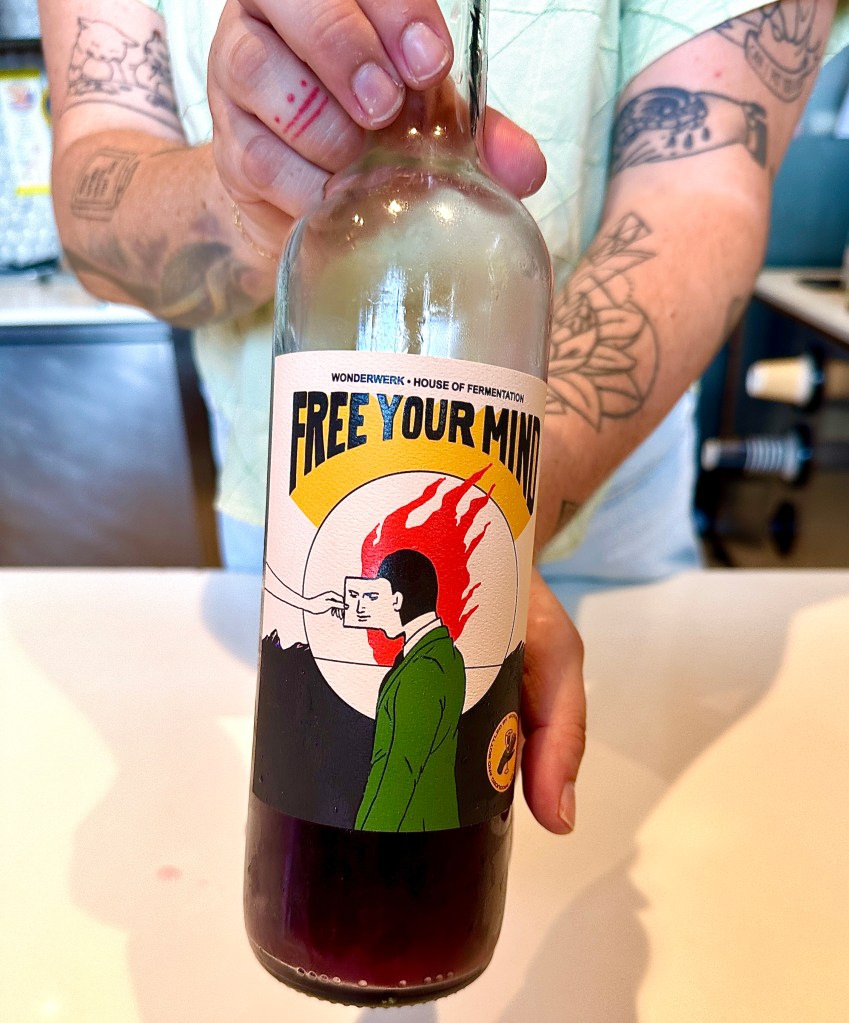
And we like the design of all the various labels on wine bottles. At a party a few days ago, we spotted this bottle of red called Free Your Mind. The wine was decent. Good, nothing spectacular, but not bad. We’d buy a bottle.
But the wine label, the name and design: Awesome!
The wine is produced by Wonderwerk, a Los Angeles-based winemaker. The company’s branding and design sense is solid, savvvy and fresh.
The humble wine label is actually a great canvas for an exercise in practicing good graphic design. A lot of information, both practical and aesthetic, needs to be conveyed on a small patch of space.
Most wine labels — especially for mass-produced wines — suck in terms of design. They are either terribly unimaginative or — even worse — terribly pretentious and locked in on old-fashioned legacy design tropes that lack personality. Think the heavy serif fonts, symmetrical faux Old World design flourishes, and illustrated drawings of chateau.
But for every dozen boring and faux-tropey labels, there’s at least one bold, clever, playful and well-designed label that leans heavily into the label space as a way to communicate a vibe and stand out on the wine shop shelves.
A lot of everyday table wine consumers seem to pick a wine based on price and a subjective sentiment about the label, how it looks and resonates with them. This makes the importance of the label all the more critical in the marketing and branding of the wine.
Wine is about taste, both sensory and aesthetically, and good design goes a long way to conveying the producers’ own sense of taste to the would be buyer. Of course, it doesn’t necessarily mean the wine is any good. That is what the tongue and nose (and a good wine critic) are for.

 GLOBAL GRAPHICA