
In the grand spectacle that is the art world, few artists can command attention quite like Jeff Koons. With his bold and unabashedly ostentatious creations, Koons has become synonymous with contemporary art in the post-modern era. Born on January 21, 1955, in York, Pennsylvania, this provocative artist has carved a niche for himself, blurring the lines between high and low culture, challenging conventional notions of taste, and leaving an indelible mark on the art landscape.
Koons’s journey into the realm of art was not a direct one. Before the acclaim, he cut his teeth in the advertising industry, honing his skills in visual communication and captivating the masses. This background in marketing and promotion would later manifest itself in his distinctive artistic approach. Koons’s ascent to artistic stardom began in the 1980s, a decade that celebrated excess and embraced the cultural zeitgeist of materialism.
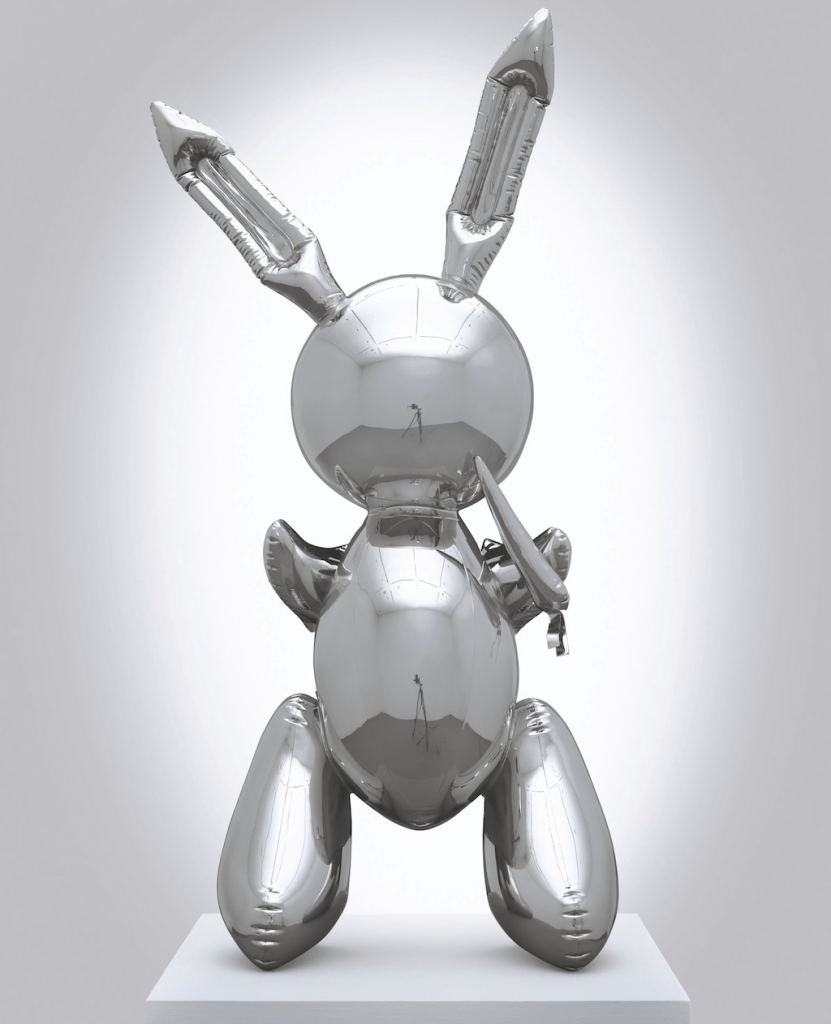
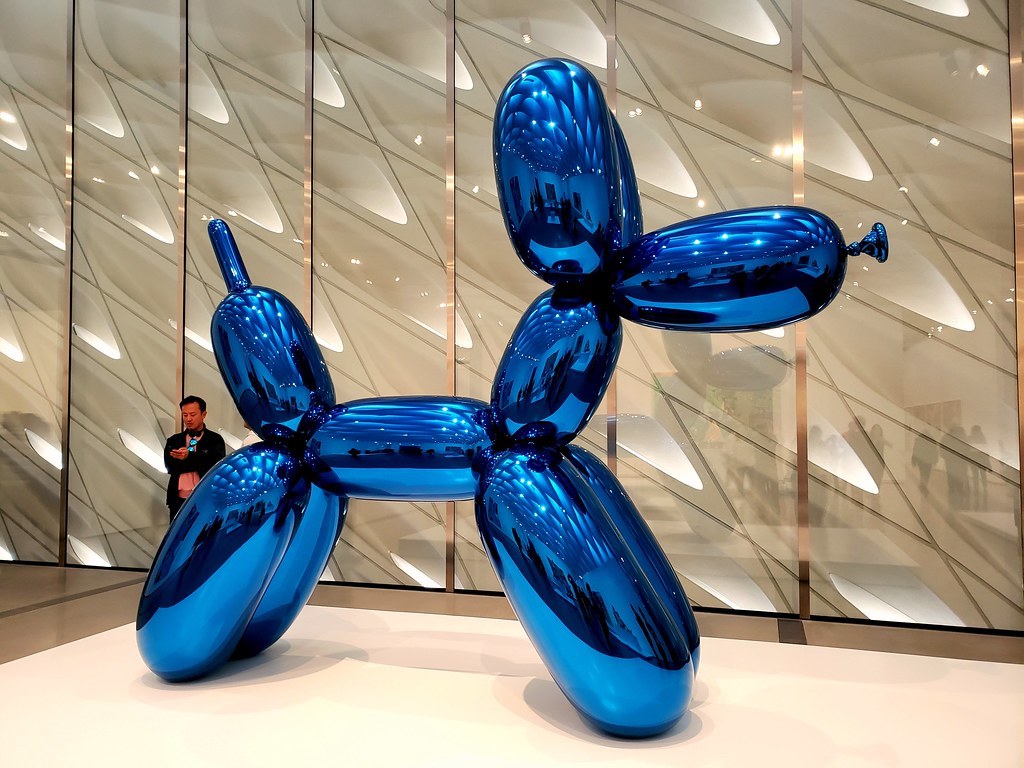
One of Koons’s most iconic works, the “Balloon Dog,” encapsulates the essence of his style. The metallic, mirror-finished sculpture stands tall, capturing the whimsy and playfulness of a childhood balloon animal. Its reflective surface mesmerizes viewers, encouraging them to confront their own image while reflecting the gleaming spectacle that is contemporary society. A towering totem of stainless steel, “Balloon Dog” instantly became a symbol of Koons’s irrepressible spirit and his ability to transmute the banal into the extraordinary.
Another noteworthy creation, the “Inflatable Rabbit,” captures a similar spirit. It’s a creature made entirely of stainless steel but resembling a vinyl inflatable plaything. Its unabashed playfulness and unabridged charm bewitched all who laid eyes on it.
And then there were the basketballs, suspended in a state of eternal suspension in a glass case, a poignant reminder of our collective aspirations and failures. Koons’s “Basketball” series further underscores his ability to provoke thought and question artistic boundaries. By presenting a common object of everyday life within the realm of art, Koons encourages us to reevaluate the value we assign to objects and their aesthetic potential. In doing so, he blurs the line between the ordinary and the extraordinary, a recurring theme in his body of work.
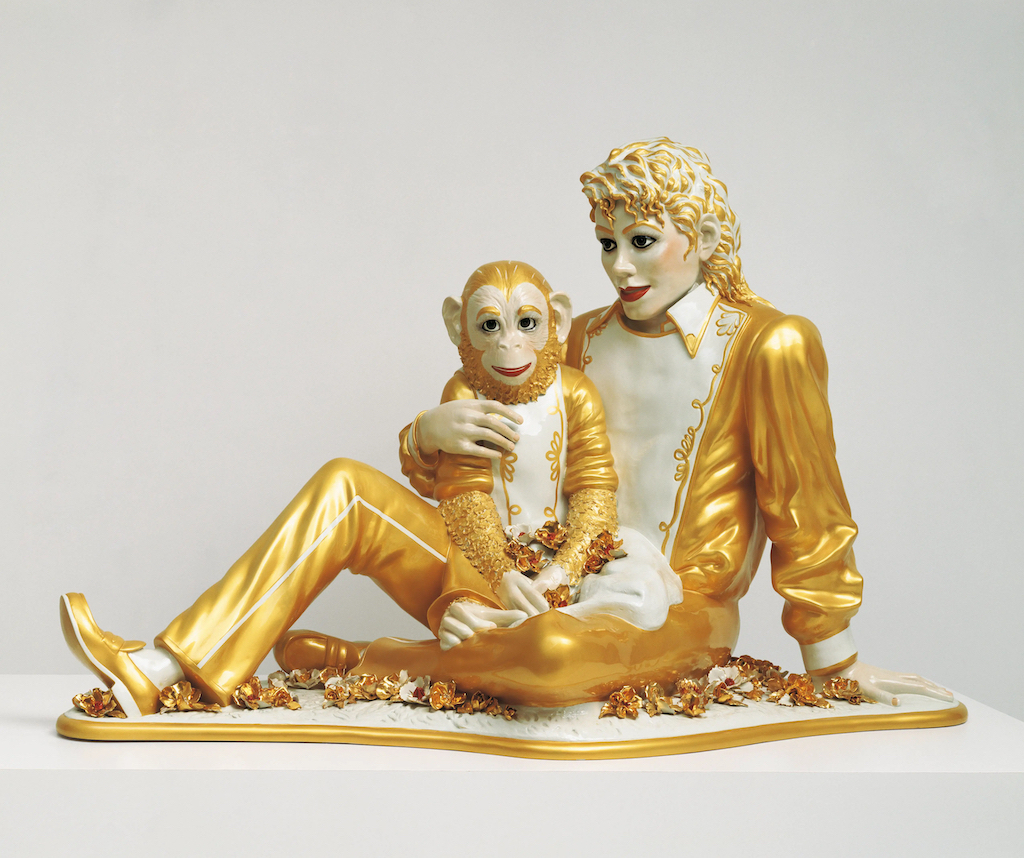
One of Koons’s most controversial yet mesmerizing creations is the “Michael Jackson and Bubbles” sculpture. Depicting the pop icon holding his pet chimpanzee, the artwork confronts issues of celebrity, fame, and the complexities of human-animal relationships. Its life-size scale and the realistic but kitchsy, giant toy-like rendering of the figures imbue the piece with a sense of unnerving intimacy.
Koons’s artwork draws influence from diverse sources, ranging from Marcel Duchamp’s readymades to the Pop Art movement of the 1960s. By embracing elements of kitsch, consumer culture, and the mass-produced, Koons challenges the boundaries of taste, forcing us to question our preconceived notions of art and beauty.
His degree of influence on contemporary art cannot be overstated. Koons’s unabashed celebration of consumerism and his audacious exploration of popular culture have paved the way for a new generation of artists. His work has opened up avenues for dialogue and experimentation, sparking conversations about the nature of art and its relationship with society.
While Koons’s artistic achievements are undeniably significant, his personal life has also attracted attention. Notably, he was involved in a creative and romantic partnership with the Italian adult film actress and politician, Cicciolina. The relationship, which lasted from 1991 to 1994, resulted in several collaborative works that challenged societal taboos and blurred the lines between art and pornography.
Throughout his career, Koons has been the subject of major milestone exhibitions at renowned art institutions. His retrospective at the Whitney Museum of American Art in 2014, aptly titled “Jeff Koons: A Retrospective,” showcased over 150 of his most notable works, cementing his status as a seminal figure in contemporary art. His exhibitions at esteemed venues like the Guggenheim Museum, the Centre Pompidou, and the Tate Modern have further solidified his place in art history.
Like any polarizing figure, Koons has not been immune to criticism and controversy. Detractors argue that his work is an embodiment of commercialism and spectacle, a calculated pursuit of fame and fortune. Others question the originality of his ideas and accuse him of being a master marketer rather than a true visionary. Nevertheless, it is precisely these debates and discussions that have propelled Koons to the forefront of contemporary art, solidifying his status as a formidable force in the art world.
At the age of 68, Jeff Koons continues to push boundaries, challenge expectations, and provoke thought through his audacious and captivating creations. His ability to seamlessly blend high and low culture, his unapologetic celebration of the mundane, and his audacious exploration of popular culture make him an icon of post-modern art. Whether revered or reviled, Koons’s art remains an undeniable presence that demands attention, questioning and reshaping our perceptions of art in the modern world.




 GLOBAL GRAPHICA